
New Delhi | December 2025
At the FAI Annual Seminar 2025, one of the fertilizer industry’s most influential platforms, Mr. Siddhartha Doshi of Ray Nano Science & Research Centre presented a compelling strategic perspective on India’s emerging leadership in nano fertilizers, drawing strong engagement from policymakers, fertilizer manufacturers, scientists and senior industry stakeholders.
His address positioned nano fertilizers not as a peripheral innovation but as a structural evolution of the fertilizer industry, capable of reshaping productivity, sustainability, and long-term agricultural economics. Emphasizing efficiency-driven nutrient delivery and reduced environmental losses, Siddhartha Doshi highlighted nano fertilizers as a practical response to the growing global demand for smarter and cleaner agricultural inputs.
A key message from the session was that India is uniquely equipped to lead this transition globally. Siddhartha Doshi pointed to India’s integrated strengths—scientific depth, real-world agronomic diversity, large-scale manufacturing capability and increasing global trust—as factors that few countries can replicate simultaneously.
He underlined that this convergence allows India not only to scale nano fertilizer adoption domestically, but also to set global benchmarks in technology, validation and deployment, particularly for emerging and agrarian economies.
Siddhartha Doshi stressed that farmer confidence and institutional credibility will ultimately determine the success of nano fertilizers at scale. Clear standards, consistent product performance, training-driven adoption and aligned advisory frameworks were identified as essential enablers to translate technological promise into measurable field impact.
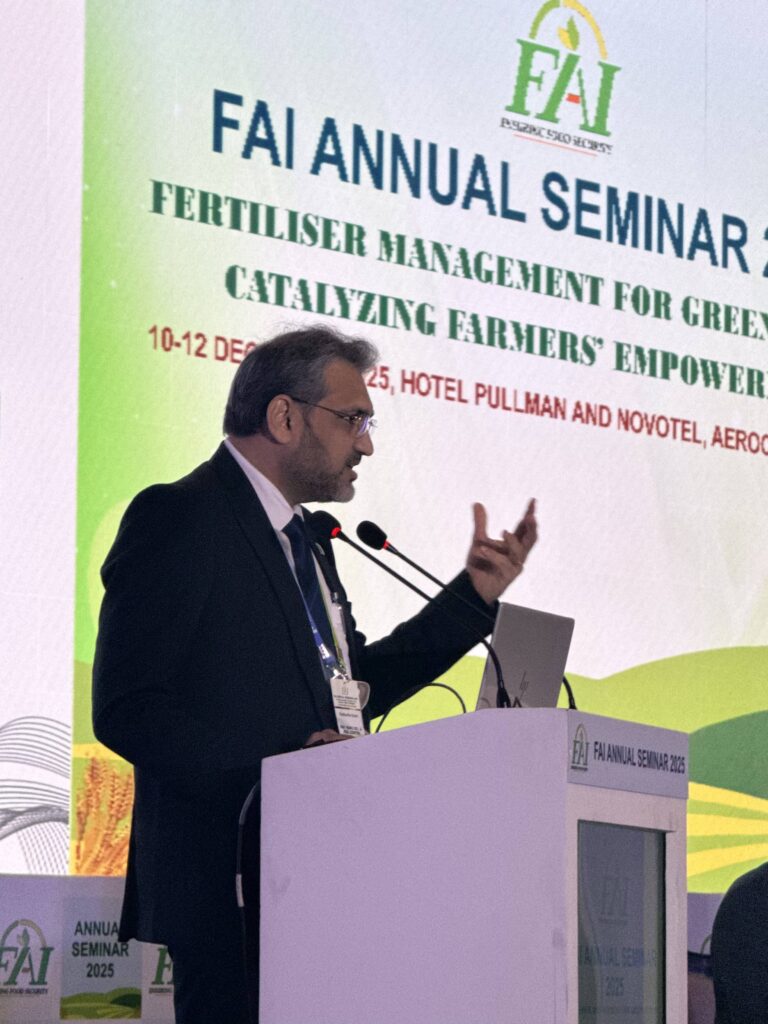
He also highlighted the importance of policy alignment and regulatory responsiveness, noting that clarity in approvals, exports, and international engagement would be critical for India to fully capitalize on the opportunity.
Concluding his address, Siddhartha Doshi captured the significance of the moment with a powerful message:
“India stands at a rare intersection of scientific capability, agronomic diversity, manufacturing strength and a global diplomatic moment where nations are actively seeking sustainable, efficient, next-generation agricultural solutions. Nano fertilizers are not just a technological upgrade — they represent a new paradigm in nutrient management, environmental responsibility and fertilizer economics.
This is not merely an opportunity to lead a sector. It is India’s opportunity to shape the next era of global agriculture.
The world is ready for this transformation. India must now choose to lead it.”
The presentation was widely regarded as a strategic and timely articulation of India’s role in the future of fertilizers, moving the discussion beyond products toward systems, policy and global responsibility. At a time when agriculture worldwide is under pressure to deliver more with less, the address reinforced that India is not just participating in the nano fertilizer revolution—it is positioned to define it.

